For decades, the field of organ transplantation has been constrained by a single, harsh truth: time is the worst enemy. Limited storage time remains a major obstacle, severely limiting the number of successful procedures and increasing the associated costs. Limenbio aims not only to improve existing storage methods, but also to introduce radical changes—so fundamental that they could redefine transplantation.
In this exclusive interview, we trace the company's remarkable journey with Limenbio co-founders CTO, Alexander and Business Development Manager, Arkadiy: a decade-long odyssey of unwavering belief, technical breakthroughs, and the strategic pursuit of high-impact disruption.
Chapter 1: The Incubation of a Breakthrough Idea (2010–2012)
The genesis of Limenbio wasn't born in a boardroom, but in a low-key academic setting. Our story begins with Alexander Ponomarev, founder and CEO of InPres and present Limenbio co-founder who focuses on technology development, during his time at the Medical Academy.
"The initial spark came from a typical academic assignment," Arkadiy recalls. "His lab head suggested exploring how gases might influence biological materials. But Alex didn't stop there. He began investigating the potential of clathrates—gas hydrates—as a potential long-term storage solution."
This early hypothesis, focused on gas-based preservation (initially targeting long-term storage via clathrates), immediately garnered attention. By 2010, the Alexander’s secured its first grant under the Russian Foundation for Assistance to Small Innovative Enterprises (FASIE), followed by funding from the Sverdlovsk Region Innovation Center (where Arkadiy was working then).
Securing Seed stage grants strongly validated the core concept's scientific merit and innovative potential. It signals that the technology passed rigorous peer review even before a robust commercial model existed.
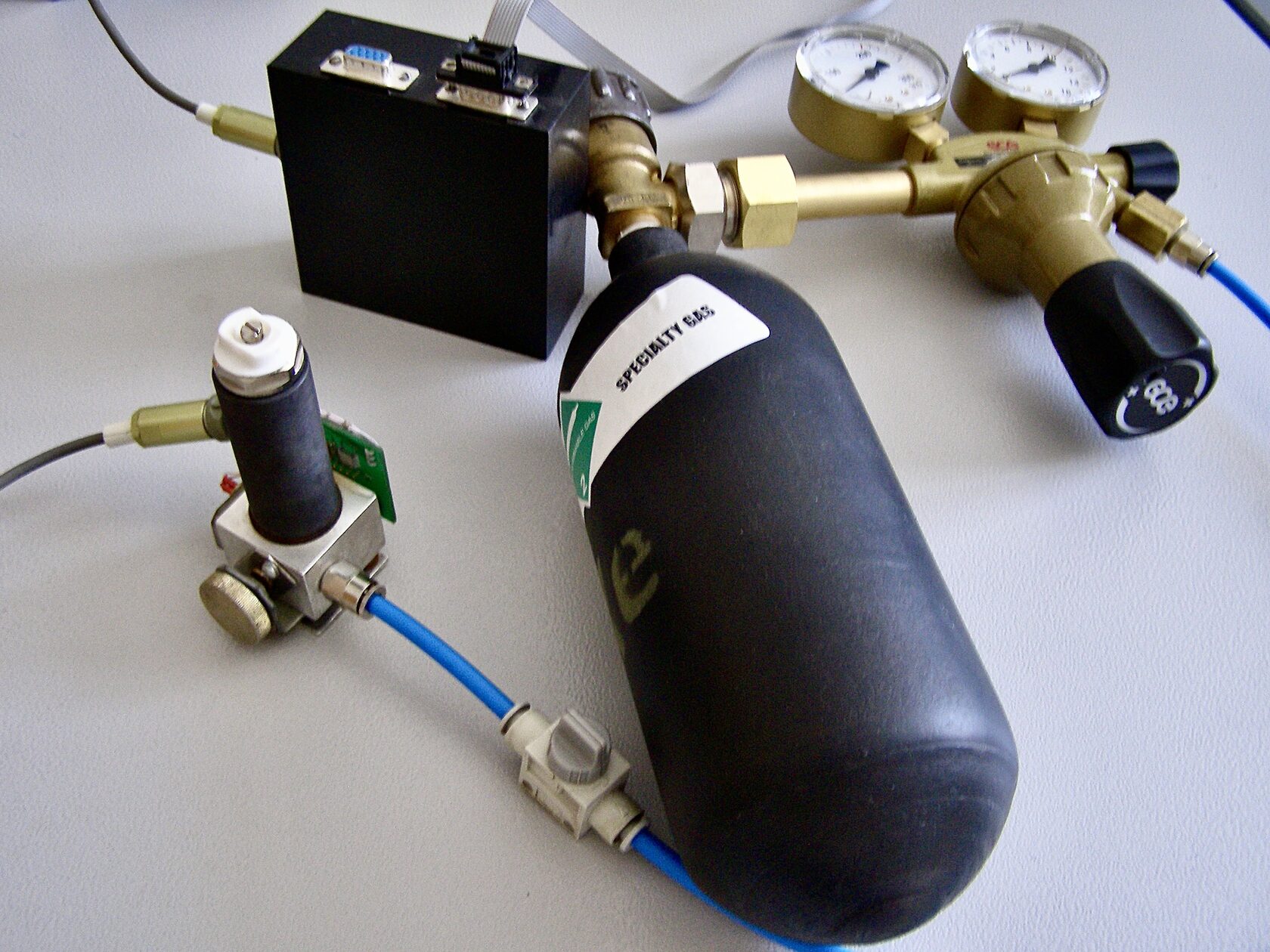
The first major challenge, however, wasn't scientific, but engineering. Alexander had to build a prototype of a sealed chamber to contain the low-pressure gas mixtures — an unexpected hurdle. Both co-founders note that maintaining perfect seal integrity over long periods at low pressure proved technically more demanding than high-pressure systems. This period culminated in the formation of the initial corporate entity in 2012, setting the stage for commercialization.
Chapter 2: The Pivot and the Unwavering Belief (2013–2018)
As the company progressed, the clathrate approach, while theoretically promising, was ultimately decommissioned due to inherent technical complexity and the damaging "de-clathration" process on tissues. This was the first time the team changed direction, focusing instead on medium-to-long-term preservation of cells and tissues using a modified gas atmosphere—the technology that defines Limenbio today.
The company entered a crucial phase of application exploration. As a part of PhD Alexander executed initial experiments including fibroblasts and rat skin grafts, but the results were inconclusive regarding clear market application. The first pivot moment of the transition to red blood cells (RBC) showed promising results, which were confirmed during collaboration with Aalborg University in 2013.
Despite robust scientific momentum (culminating in the successful defense of a PhD thesis in 2016, two core patents in 2017, and an international publication in Cryo-Letters in 2018), the business side encountered a torrent of rejections.
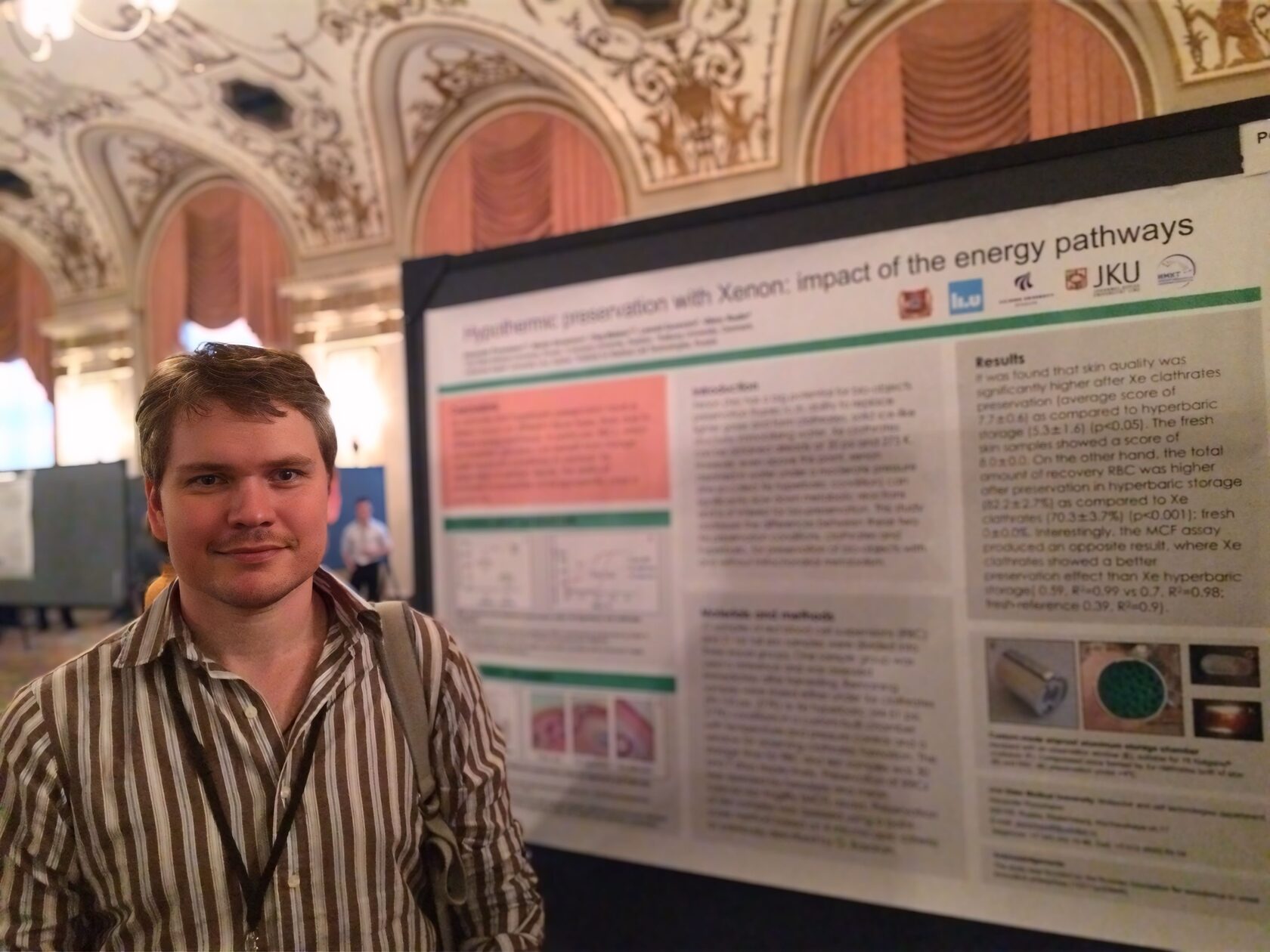
"I showed this project everywhere," Arkadiy recalls of this challenging period. "To RVC (Russian venture capital company), to the Skolkovo StartUp Village, to Rostec’s medical device enterprises, and private medtech firms. The message was almost uniformly: 'Your startup is in a very early stage'"
Yet, Arkadiy never gave up. His persistence stemmed from a belief rooted in the project's disruptive technological potential, not just its initial financial projections.
"As an investment and technology analyst, I recognized that the financial models were uncertain, but the technology was fundamentally transformative," Arkadiy explains. "It wasn't merely an incremental 10% improvement; it had the potential to change the industry by an order of magnitude—to drastically reduce cost or exponentially increase quality and accessibility. That potential is what kept the flame alive."
Chapter 3: Technology transformation and investor feedback (2019–Present)
The real turning point came when potential industry partners, while rejecting the RBC application, suggested a new, high-stakes direction: solid organs, citing the urgent, fundamental problem in organ transplantation, where existing technologies are grossly inadequate. This feedback acted as a crucial strategic pivot point.
"They gave us the challenge: 'If you can show this works on a heart, then we'll talk,'" Arkadiy remembers.
Driven by this challenge and personal investment from Arkadiy to cover expenses (travel, gases, prototypes), the team collaborated with the Shumakov National Research Center. The result in 2019 was nothing short of a paradigm shift: 11 hours of preservation followed by the successful heterotopic transplantation of a rat heart.
"Back then, I was focused purely on science. People thought my experiments were strange and wouldn't lead to any real-world treatments. But our core technology not only showed it could work for heart transplants—it identified vascular gas perfusion as the critical factor. This was a major shift, as it detached our concept from the liquid preservatives everyone else was using," Alexandr remembers.
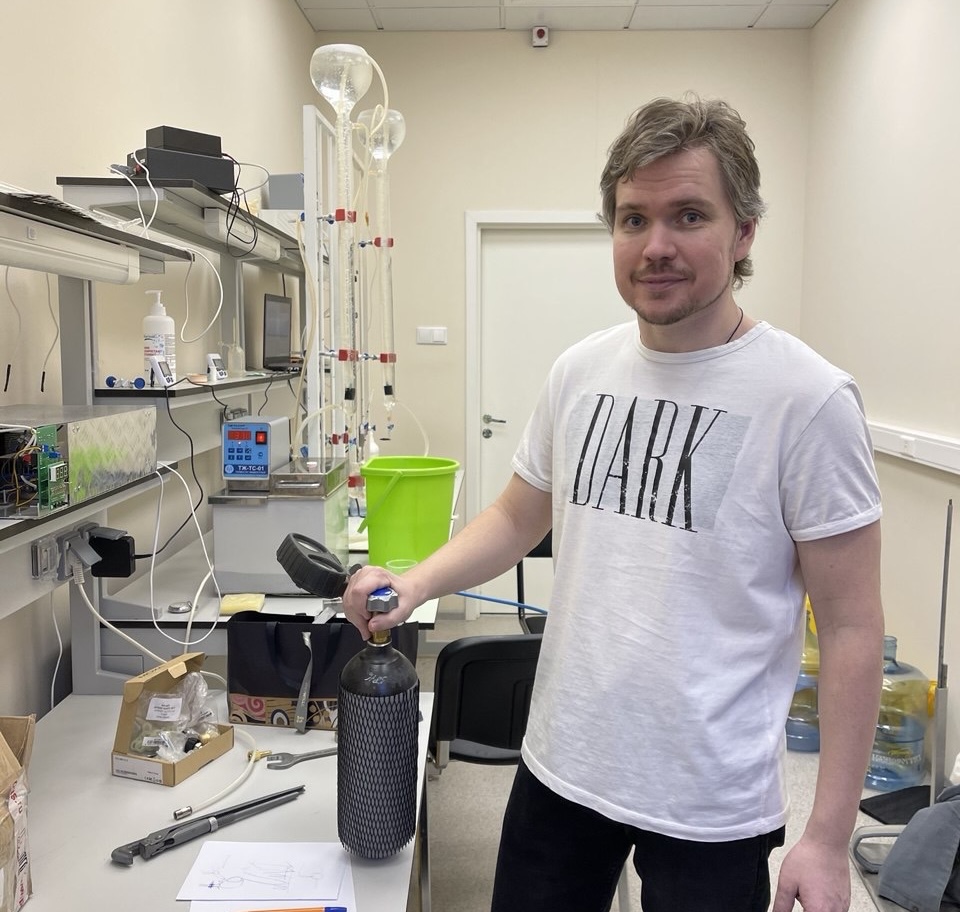
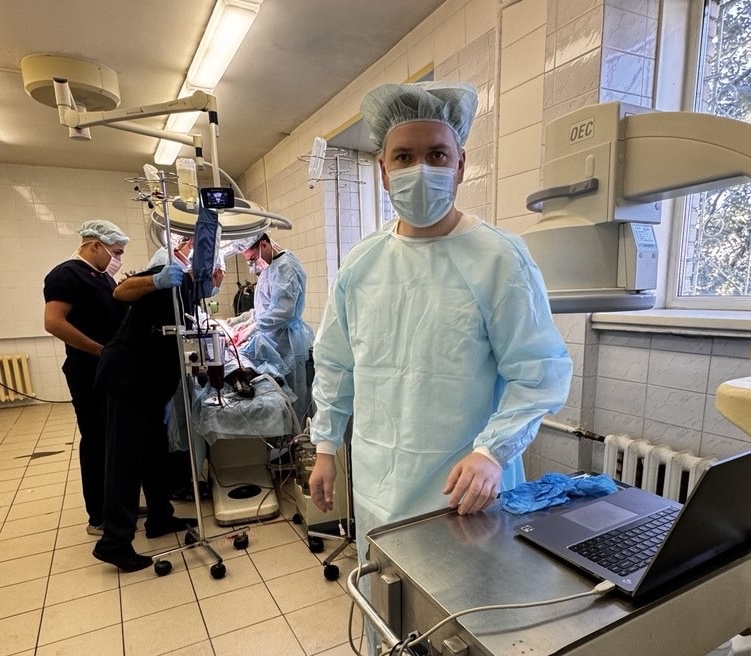
This success shifted the narrative from a niche technology to a major medtech disruptor.
Armed with tangible organ-level results, Arkadiy approached Kamaflow VC.
"I presented it as a classic high-risk, high-reward proposition," Arkadiy states. "We needed $100K to properly scale, an amount we couldn't personally fund. I was transparent: we could lose it all, but if we succeeded, the impact would be revolutionary."
Eduard Adamyan, the current CEO of Limenbio Inc. and investor at Kamaflow, immediately grasped the vision and the asymmetrical risk/reward payoff. The investment in 2022 marked the definitive validation of the technology's commercial readiness and potential scale.
Chapter 4: Scaling the Revolution: Current Stage and The Call to Action
The Kamaflow investment immediately fueled a rapid expansion phase:
- Scientific Validation: Further successful experiments on rat hearts (followed by Langendorff evaluation at Institute of Immunology and Physiology of the Ural Branch of the Russian Academy of Sciences.
- Scalability Leap (2023): Development of new, capacious, and smart equipment capable of handling large organs, proving the technology is not limited to small tissues.
- Large Animal Trials (2024): Successful pilot studies on rabbit lung preservation and pig heart preservation (12+ hours). These are crucial steps toward human application.
Current Stage & Next Steps: Limenbio is now squarely in the pre-clinical development stage. The focus is on:
- Conducting a definitive series of large animal (pig) experiments to optimize protocols for clinical trials.
- Executing the first human heart experiment (ex-vivo evaluation).
- Securing international patent protection (US, China, etc.).
- Forming an Advisory Board with experts in regulatory affairs, clinical trials, and market access.
- Developing industrial design and manufacturing partnerships for the commercial product.
The Limenbio Value Proposition: Why Invest Now?
Arkadiy summarizes Limenbio’s investment appeal with a concise, powerful message to the global VC community:
"Investing in Limenbio is an investment in a technology that will disrupt the global transplant industry by fundamentally increasing the availability of viable organs."
The core competitive advantages are clear:
- Exponential Increase of Organ Availability: Our extended, high-quality preservation time directly translates into a drastically larger window for logistics, cross-continent organ sharing, and better recipient matching.
- Low Barrier to Adoption: Limenbio's technology is significantly less demanding on personnel training and auxiliary equipment than complex perfusion devices. Providing an organ in the self-operating smart box is simple to integrate and operate.
- Cost-effectiveness: Thanks to its simple design and maintenance, the total cost of the technology is significantly lower than existing organ preservation solutions.
Limenbio is not just offering a new product; it is offering a new supply chain for life-saving organs. After a long, rigorous path of scientific validation, engineering refinement, and strategic pivots, the company stands at the precipice of clinical trials.